


Avian Influenza
Keeping your farm environment clean can feel like a constant battle. A single sick bird or a dirty pair of boots can change the hygiene levels of your entire facility. While these viruses are a serious concern for any operation, focusing on water hygiene and simple, daily habits can help you maintain a strong biosecurity protocol.
This page provides information on how Avian Influenza is known to spread and the methods used to manage hygiene for water and equipment.
What is Bird Flu?
Bird flu is a highly contagious virus that spreads between birds. It often originates in wild water birds, but it can infect farm animals such as chickens and turkeys [1]. There are two main categories: low pathogenic strains and highly pathogenic avian influenza (HPAI).
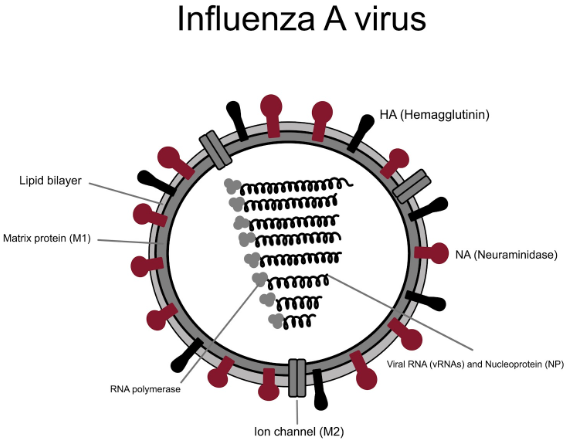
De anatomie van een influenza A-virus [4]
Cause and symptoms of Bird Flu
Infected birds pass the virus through saliva, nasal secretions, and feces. Transmission occurs through contact with these fluids or via surfaces such as farm tools, clothing, and water systems [1].
Symptoms described in poultry: These can include a loss of energy and decreased feed intake. In highly pathogenic cases, sudden death may occur before other signs are visible [2].
The Risks of Bird Flu for Farmers
Combating bird flu is a priority because an infection can rapidly impact a commercial poultry operation. If the virus spreads, it can lead to the loss of a flock and significant financial consequences [2]. An outbreak often requires the farm to follow strict regulatory protocols, including culling and temporary shutdowns [3].
Because the virus can persist in water and organic matter, managing transmission routes is a primary focus. Since standard antibiotics do not act on viruses, farmers prioritize biosecurity and water hygiene to manage the environment where the virus may be present [1].
How HOCl can help combat Bird Flu
Bird flu is an "enveloped" virus, meaning it has an outer layer made of fats and proteins. This layer is necessary for the virus to remain active and enter a bird’s cells [5].
HOCl (Hypochlorous acid) is an oxidizing agent authorized for use in water systems (PT5). It is designed to react with the organic materials it contacts, including the outer layers and proteins of microorganisms [5].
Since bird flu is known to move through shared drinking water, using HOCl to treat the water is a common part of a hygiene routine. By addressing the microbial load in the water lines, HOCl assists in maintaining the sanitary condition of the system [6].
The Watter solution
The Watter System allows farmers to manage common transmission routes by treating the drinking water. The system uses salt, water, and electricity to generate a disinfectant solution on-site, where HOCl is the active ingredient.
This process allows for a consistent application of the solution in the drinking lines. The system is designed for use in maintaining microbial hygiene in drinking systems and managing the presence of microorganisms in shared water lines.
The advantages of Watter for your livestock farm:
- Broad-Spectrum Efficacy: The on-site generated solution is effective against a wide range of microorganisms, including bacteria, viruses, yeasts, and fungi.
- Consolidated Disinfection: Because the solution addresses multiple types of pathogens, it eliminates the requirement to purchase and store various specialized chemical disinfectants.
- Water Quality Maintenance: Helps maintain the microbial quality of the drinking water provided to animals.
- On-site Generation: Produced at the farm, reducing the logistics and risks associated with chemical handling.
- Versatile Application: Suitable for the disinfection of surfaces such as stables, equipment, and boots.
- Regulatory Compliance: The active substance supplier is listed on the Article 95 list under the EU Biocidal Products Regulation (BPR).
Independent laboratory studies, such as those conducted by TNO, have tested the solution generated by the Watter System against various classes of microorganisms, including enveloped viruses, under specific test conditions. By integrating this system, farmers can maintain a consistent disinfection protocol as part of their broader biosecurity measures.
Reference List
- Agriculture Victoria. (n.d.). The facts about avian influenza. Retrieved March 26, 2026, from https://agriculture.vic.gov.au/biosecurity/animal-diseases/poultry-diseases/avian-influenza-bird-flu/the-facts-about-avian-influenza
- Centers for Disease Control and Prevention. (n.d.). Avian influenza (Bird Flu). Retrieved March 26, 2026, from https://www.cdc.gov/flu/avianflu/index.htm
- Imai, M., & Kawaoka, Y. (2012). Schematic diagram of influenza A virus [Image]. ResearchGate. https://www.researchgate.net/figure/Schematic-diagram-of-influenza-A-virus-Inserted-in-the-lipid-bilayer-are-the_fig2_6211919
- Mostafa, A., Abdelwhab, E. M., Mettenleiter, T. C., & Pleschka, S. (2018). Zoonotic potential of influenza A viruses: A comprehensive overview. Viruses, 10(9), 497. https://pmc.ncbi.nlm.nih.gov/articles/PMC4363024/
- National Institute for Public Health and the Environment. (n.d.). Avian influenza. Retrieved March 26, 2026, from https://www.rivm.nl/en/avian-influenza
- World Organisation for Animal Health. (n.d.). Avian influenza. Retrieved March 26, 2026, from https://www.woah.org/en/disease/avian-influenza/
Do you have any questions about Avian Influenza?
Our specialists are happy to advise!